Open conflict between rival factions of Iran’s regime over renewed war and foreign infiltration exposes a deepening crisis at the top of power. As the anniversary of the November 2019 uprising approaches, the central question is whether these divisions will create greater space for...
With poverty reportedly reaching 40 percent and some 34 million people facing extreme poverty, Iran’s deepening livelihood crisis exposes the limits of temporary relief and raises fundamental questions about the distribution of national...
Nine months after promising a one-million-toman food voucher following the removal of preferential exchange rates, the regime has yet to deliver the promised increase. Meanwhile, rising food prices, new eligibility restrictions, and plans...
The proposed “Virtual Space Regulation” law would expand security control over online activity, enforce identity verification, and preserve a lucrative censorship-driven market as millions of Iranians depend on internet access for their livelihoods.
Iran’s regime has...
What began as a weekly hunger strike by political prisoners has grown into a nationwide and international campaign challenging the regime’s execution apparatus, with support from families, resistance activists, political figures, and human...
Mai Sato’s report to the UN General Assembly describes thousands killed, at least 29 executions linked to January’s protests, more than 4,000 reported arrests on national-security charges, and worsening economic hardship as the...
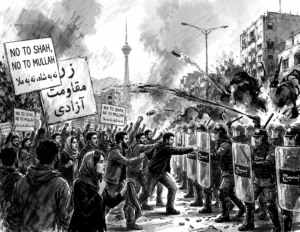
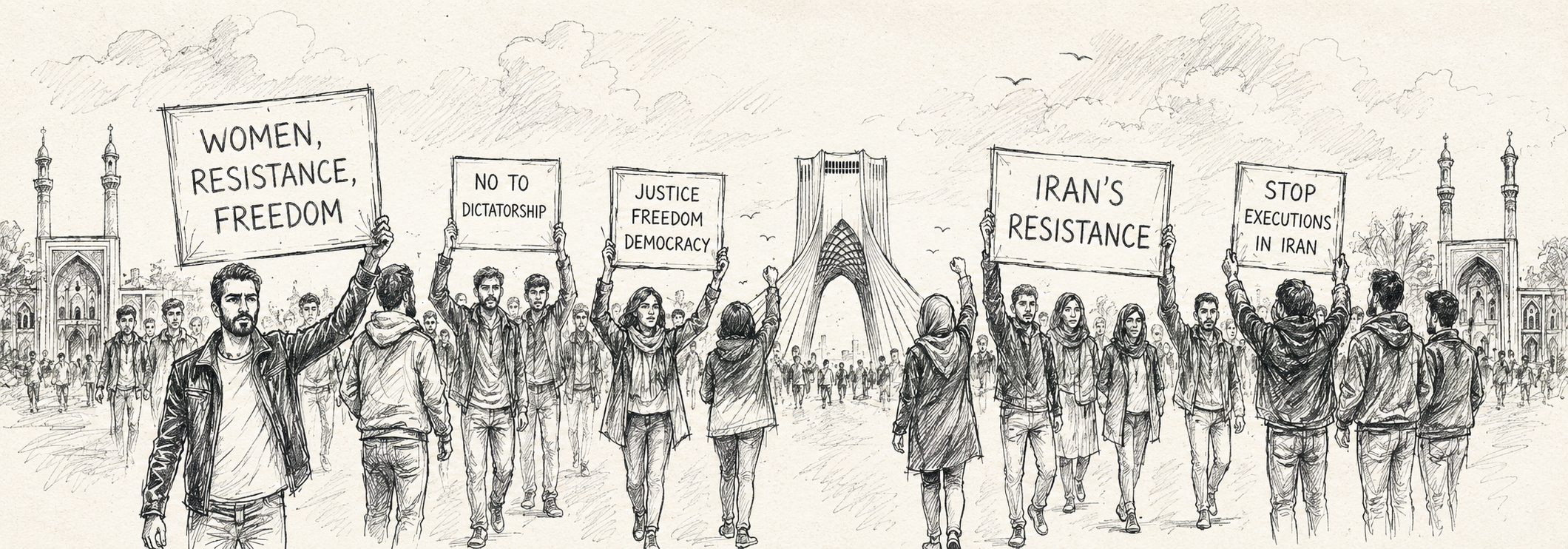
Seven years of mounting economic hardship, deepening political fractures, and the evolution of organized resistance have kept the causes of Iran’s November 2019 uprising alive, making it a defining turning point in the struggle against religious dictatorship.
The November 2019 uprising was not an isolated explosion of public anger that can be confined to the pages of history. To treat it as a concluded episode is to misunderstand the dynamics of Iranian society and the conflict between a population demanding fundamental change and a regime determined to preserve its rule. November 2019 marked a decisive escalation in that confrontation. Its significance lies not only in the scale of the protests...
A 230 percent tuition increase at one medical university, rising dormitory costs, deteriorating food services, and mounting living expenses are making higher education increasingly...
The proposed “Virtual Space Regulation” law would expand security control over online activity, enforce identity verification, and preserve a lucrative censorship-driven market as millions of Iranians depend on internet access for their livelihoods.
Iran’s...
A Geological Survey official warns that land subsidence now affects nearly 100,000 square kilometers of Iran, with previously isolated zones merging across large parts of the country.
Iran’s environmental crisis is taking an increasingly...
From villages receiving drinking water for only two hours a day to muddy tap water in Ahvaz and repeated blackouts in Tehran, Iran’s infrastructure crisis is increasingly becoming a crisis of survival.
For millions...
The Iranian Resistance reports a series of retaliatory actions in Tehran and several other cities following an attack by regime forces on market vendors, with incidents targeting Basij facilities, regime banners, and other...
Seven years of mounting economic hardship, deepening political fractures, and the evolution of organized resistance have kept the causes of Iran’s November 2019 uprising...
Belgium’s Deputy Prime Minister and Foreign Minister says deciding who should lead Iran belongs exclusively to the Iranian people, rejecting calls to recognize the...
Protest leaflets and photo messages denounce the Iranian regime’s president during his November 2 visit, accusing his government of executing young people and innocent...
Forty-seven Iranian associations across Belgium, the Netherlands, Luxembourg, and France had urged Belgian leaders to reject the promotion of the shah’s son, warning that...